 Chinese
 Italian
 Spain
Spain French
 German
 Arabic
 Portugese
Understanding the Core Concept of Oleamide: How a Molecular Film Transforms Polymer Performance
Modern polymer manufacturing depends heavily on surface control. Whether the goal is improving slip performance, reducing friction, enhancing mold release, or preventing film blocking, manufacturers increasingly rely on specialized oleochemical additives to optimize processing efficiency and final product quality.
Among the most widely used fatty acid amides in the plastics industry is oleamide, a highly effective slip agent and lubricant used across polyethylene (PE), polypropylene (PP), flexible packaging films, injection molding, masterbatch production, and numerous industrial applications.
What makes oleamide so effective is not simply its chemical composition, but the unique way its molecules organize themselves at the material surface. The true core concept behind oleamide lies in the formation of a microscopic monomolecular film that fundamentally changes how polymer surfaces behave.
The Science Behind Oleamide’s Monomolecular Film
To understand oleamide, imagine placing a tiny drop of oil onto the surface of water. Instead of remaining in a thick droplet, the oil naturally spreads into an ultra-thin layer only one molecule thick. This phenomenon is known as a monomolecular film.
Oleamide behaves similarly inside polymer materials.
The molecule itself contains two highly important structural components:
- A polar amide “head”
- A non-polar hydrocarbon “tail” consisting of an 18-carbon chain
During plastic processing, oleamide is blended into molten polymer materials such as PE or PP. As the plastic cools, the oleamide molecules gradually migrate, or “bloom”, toward the surface.
At the surface, the polar head anchors itself to the polymer structure or nearby metal interfaces, while the long hydrocarbon tails orient outward. The result is an invisible lubricating layer approximately 2–3 nanometers thick.
Despite its microscopic size, this molecular film dramatically alters surface properties and enables multiple functional benefits simultaneously.
How Oleamide Creates Slip, Lubrication, and Demolding Performance
One of the primary uses of oleamide in polymer additives is surface lubrication.
The outward-facing hydrocarbon tails possess extremely low surface energy, meaning other materials do not strongly adhere to them. This creates a slippery interface that significantly reduces friction between surfaces.
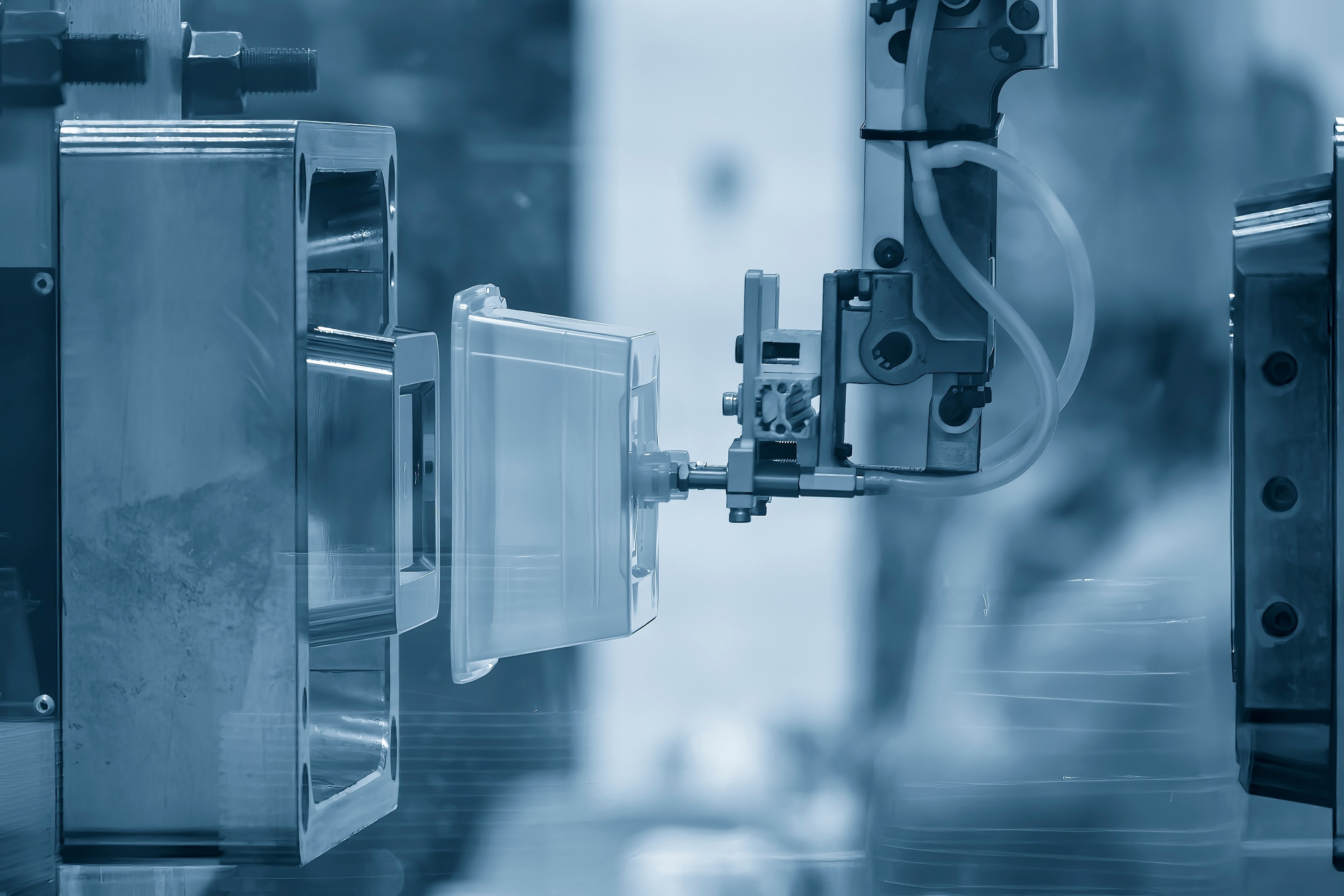
In plastic film applications, this allows films to slide smoothly across rollers, guides, and packaging equipment. In injection molding, the oleamide film acts as a release layer between molten plastic and the metal mold surface, helping finished parts eject cleanly during demolding.
This is why oleamide is widely used as both a slip agent and mold release additive in high-speed processing environments.
For manufacturers, the benefits include:
- Lower coefficient of friction (COF)
- Reduced sticking and blocking
- Faster processing speeds
- Improved demolding efficiency
- Reduced equipment wear
These performance improvements help increase production efficiency while reducing material waste and downtime.
Moisture Resistance and Anti-Adhesion Properties
Another important characteristic of oleamide comes from the hydrophobic nature of its hydrocarbon tail.
Because the molecular film repels water, it creates an effective moisture-resistant barrier on the polymer surface. This helps reduce moisture penetration and improves the durability of plastic products exposed to humid environments.
The same molecular layer also creates strong anti-adhesion performance.
Without slip additives, adjacent plastic film surfaces can gradually stick together over time due to intermolecular attraction forces. Oleamide prevents this by creating separation between surfaces and reducing the tendency for films to fuse together.
This anti-block effect is especially important in flexible packaging films, multilayer films, and roll-stock production where smooth unwinding is critical.
Dispersion and Anti-Precipitation Functions
Oleamide also functions as a dispersant in many polymer materials and masterbatch formulations.
Powders such as pigments, titanium dioxide, carbon black, fillers, and flame retardants naturally tend to clump together because of van der Waals attraction forces. Oleamide coats the particle surfaces and reduces these intermolecular attractions.
As a result, particles remain more evenly distributed throughout the polymer matrix.
This improved dispersion helps manufacturers achieve:
- More uniform color distribution
- Better surface appearance
- Improved gloss
- Reduced agglomeration
- More stable processing conditions
In many masterbatch and compound formulations, fatty acid amides play an essential role in maintaining formulation consistency and long-term product stability.
How Oleamide Helps Reduce Static Build-Up
Oleamide is also known for its antistatic contribution in plastic applications.
While oleamide itself is not electrically conductive, its lubricating film significantly reduces friction between surfaces. Since static electricity is commonly generated through friction, lowering friction also reduces static charge generation.
Additionally, the polar amide group can sometimes attract microscopic moisture from surrounding air, helping dissipate small electrostatic charges before they accumulate.
This makes oleamide useful in packaging materials, films, and molded products where reduced static behavior improves handling and processing performance.
The Critical Trade-Off: Surface Performance vs. Printability
Although oleamide delivers outstanding lubrication and slip performance, its blooming mechanism can create challenges in downstream surface treatment applications.
Because the oleamide layer sits on the outermost surface, paints, adhesives, inks, coatings, and vacuum metallization layers may bond to the oleamide film instead of the polymer itself. This can reduce printability and adhesion strength.
Manufacturers typically address this challenge through several methods:
- Using lower-bloom or slower-migrating additives
- Applying primers or tie-layers
- Using surface treatments such as corona treatment
- Mechanically removing the surface layer before coating
Careful formulation balancing is therefore essential when selecting polymer additives for advanced applications.
Oleamide: A Small Molecule with Major Industrial Impact
Oleamide demonstrates how advanced surface chemistry can transform polymer performance using only minimal additive concentrations, often as low as 0.1–0.5%.
By forming a self-assembled monomolecular lubricating film, oleamide simultaneously delivers slip, anti-blocking, moisture resistance, demolding, dispersion, and antistatic benefits across a wide range of polymer materials.
As a specialized manufacturer of high-performance oleochemical additives, Topwellgoal supplies high-purity oleamide solutions designed for demanding polymer processing applications worldwide. With strong manufacturing capability, technical expertise, and stable quality control systems, Topwellgoal continues supporting manufacturers seeking reliable fatty acid amide solutions for modern plastics, packaging, masterbatch, and industrial material applications.