 Chinese
 Italian
 Spain
Spain French
 German
 Arabic
 Portugese
EBS Applications in Key Polymers
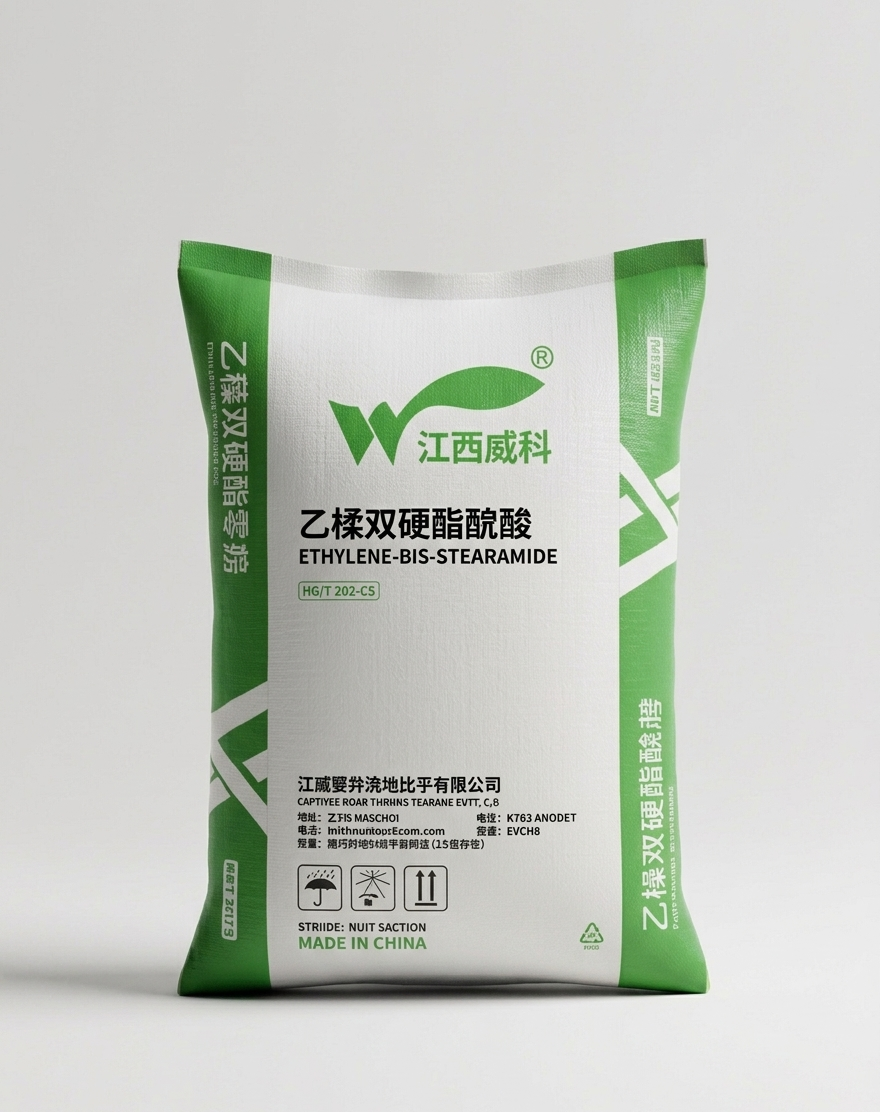
Achieving optimal processing efficiency and surface performance in modern plastics requires advanced additive technologies. One of the most versatile and widely used additives in the polymer industry is EBS (N,N'-Ethylene Bis Stearamide). Known for its dual functionality as both an internal and external lubricant, EBS plays a critical role in improving processing behavior, surface quality, and dispersion across a wide range of polymers.
As a leading manufacturer of oleochemical additives, Topwellgoal provides high-quality EBS solutions designed to meet the demands of industries such as plastics, packaging, automotive, and textiles. This article explores how EBS functions and its key applications in major polymers including polypropylene (PP), high-density polyethylene (HDPE), and PET/polyester systems.
What Is EBS and How Does It Work?
EBS is a high-melting-point synthetic wax with a unique molecular structure. It consists of a central polar diamide group and two long non-polar alkyl chains. This structure enables EBS to deliver two important mechanisms in polymer systems.
The polar portion interacts with polymer chains, reducing internal friction and lowering melt viscosity. This improves material flow during processing, making EBS an effective internal lubricant. At the same time, the non-polar chains have limited compatibility with most polymers, causing EBS to migrate to the surface and form a thin lubricating layer. This provides external lubrication, reducing adhesion to molds and processing equipment while enhancing surface finish.
This dual functionality makes EBS a highly effective additive for improving both processing and end-product performance.
EBS in Polypropylene (PP)
Polypropylene is one of the most widely used polymers in the plastics industry, and EBS plays multiple roles in enhancing its performance.
In PP systems, EBS acts as an internal and external lubricant, as well as a dispersant, slip agent, and mold release additive. One of its key benefits is improving melt flow behavior. By reducing viscosity, EBS increases the Melt Flow Index (MFI) of polypropylene, allowing it to fill molds more easily and uniformly. This is particularly beneficial in the production of complex or large injection-molded parts.
EBS also contributes to improved surface quality. By promoting smooth flow and reducing friction at the interface between the polymer and the mold, it helps produce parts with a more uniform and glossy finish.
Another critical application of EBS in polypropylene is as a dispersing agent in masterbatches. EBS coats pigments and fillers, preventing agglomeration and ensuring even distribution throughout the polymer matrix. This results in consistent coloration and improved product aesthetics.
Typical usage levels in PP range from approximately 0.1% to 2% for general applications, while masterbatch formulations may require higher concentrations, typically between 3% and 5%.
EBS in High-Density Polyethylene (HDPE)
In HDPE applications, EBS is widely used as a slip agent, processing aid, and mold release additive. Its ability to migrate to the surface makes it highly effective in reducing the coefficient of friction.
This reduction in friction is essential in applications such as packaging films and molded parts, where smooth movement over processing equipment is required. In high-speed packaging operations, EBS ensures that materials slide efficiently, improving productivity and reducing mechanical stress on equipment.
EBS also plays an important role in mold release performance. By forming a lubricating layer at the mold interface, it allows HDPE parts to be ejected more easily, reducing cycle times and minimizing the risk of defects or damage.
A particularly important application is in bottle cap production, where EBS helps control release torque. By reducing friction between the cap and bottle threads, it ensures a consistent and predictable opening experience, balancing sealing performance with consumer convenience.
Typical dosage levels in HDPE molding applications range from 0.2% to 1.0%, while film applications often require lower concentrations, typically between 500 and 2000 ppm.
EBS in PET and Polyester Systems
EBS also plays a valuable role in PET (polyethylene terephthalate) and polyester systems, particularly in applications requiring high-quality dispersion and processing efficiency.
In PET masterbatches, EBS is widely used as a dispersing agent. It ensures that pigments are evenly distributed, preventing clumping and reducing the risk of filter blockage during processes such as fiber spinning. This is critical for maintaining consistent color and product quality in textile and fiber applications.
EBS can also function as a processing aid, improving melt flow and reducing friction during extrusion and injection molding. This enhances processing stability and reduces energy consumption.
In some cases, EBS acts as a nucleating agent, promoting faster crystallization of PET. This can improve processing efficiency in applications such as thermoforming and injection molding by reducing cycle times.
Typical usage levels in PET systems are similar to those in polypropylene masterbatches, often ranging between 3% and 5%, depending on the formulation.
Key Advantages of EBS Across Polymer Systems
EBS offers several advantages that make it a preferred additive in the plastics industry. Its ability to provide both internal and external lubrication improves processing efficiency while enhancing surface quality. It also acts as an effective dispersant, ensuring uniform distribution of pigments and fillers.
In addition, EBS contributes to improved mold release, reduced cycle times, and lower energy consumption. Its high thermal stability makes it suitable for a wide range of processing conditions, including high-temperature applications.
However, it is important to note that EBS is not a compatibilizer. While it improves dispersion and processing behavior, it does not address incompatibility between different polymers, such as PET and HDPE.
Supporting High-Performance Plastic Applications
EBS is widely used in applications such as injection molding, film extrusion, masterbatch production, and fiber manufacturing. Its versatility makes it an essential additive for industries including packaging, automotive, textiles, and consumer goods.
As materials and processing technologies continue to evolve, the demand for high-performance additives like EBS is expected to grow, particularly in applications requiring precision, efficiency, and consistent quality.
Partner with Topwellgoal for Advanced EBS Solutions
Topwellgoal is a trusted manufacturer of high-quality EBS and fatty acid amide additives, offering solutions tailored to the needs of modern polymer processing. Our products are designed to improve flow, enhance surface performance, and ensure consistent quality across a wide range of applications.
With extensive experience in oleochemical additives, we support manufacturers, compounders, and distributors in optimizing their formulations and achieving superior performance.
If you are looking for reliable EBS solutions for polypropylene, polyethylene, PET, or other polymer systems, Topwellgoal is ready to collaborate with you.
Contact Topwellgoal today to learn how our advanced additive technologies can enhance your processing efficiency, improve product quality, and strengthen your competitive advantage in the global plastics industry.