 Chinese
 Italian
 Spain
Spain French
 German
 Arabic
 Portugese
The Active Ingredient Inside Every Slip Masterbatch
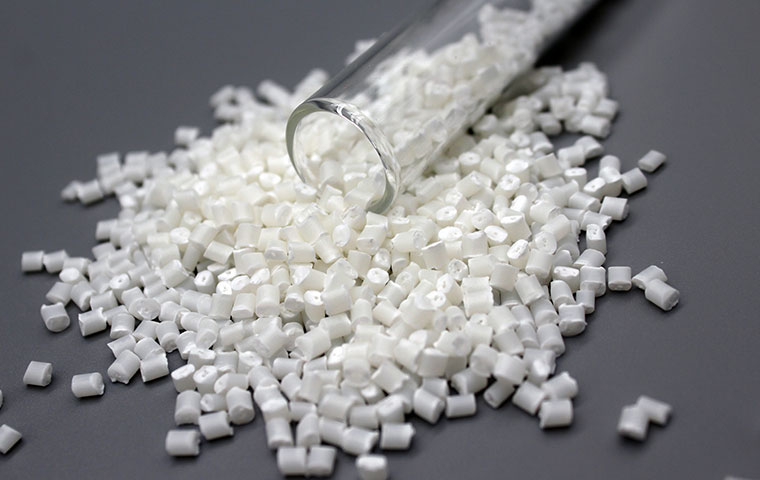
A slip masterbatch is only as effective as the fatty acid amide dispersed within it. The carrier resin, the let-down ratio, the dosage guidance on the technical data sheet, all of these matter, but they are delivery mechanisms for the active ingredient that actually does the work. Understanding how amide-based additives function as slip agents within masterbatch systems, and what determines their performance in the finished film or molded part, gives formulators and procurement teams the technical foundation to specify correctly and source intelligently.
The Migration Mechanism: Why Incompatibility Is the Design Intent
The slip performance delivered by a slip masterbatch depends entirely on a controlled incompatibility between the fatty acid amide and the polymer matrix, and understanding this is fundamental to understanding why additive selection and purity matter so much.
During processing, the oleochemical slip agent disperses uniformly through the polymer melt in the amorphous phase, where it is fully solubilized by the elevated temperature and disordered molecular structure of the melt. As the polymer cools and crystallizes, the ordered crystalline structure that forms is increasingly incompatible with the amide molecules. That incompatibility drives the amide outward, diffusing from the bulk polymer toward the film or part surface, where it concentrates into a monomolecular lubricating layer that reduces both static and dynamic friction.
This migration-driven surface layer is what makes slip agent chemistry so efficient at low addition rates. The active fatty acid amide is not uniformly distributed across the full volume of the polymer doing friction reduction work. It self-concentrates exactly where friction reduction is needed, at the contact interface between film layers and between film and metal equipment surfaces. The result is measurable COF reduction from additive concentrations measured in hundreds of parts per million.
What Slip Masterbatches Actually Deliver in Film and Molding Applications
The practical performance contributions of amide-based additives delivered through slip masterbatch format span the full range of film handling and processing challenges that high-speed packaging lines create.
COF reduction is the primary function, lowering film-to-film and film-to-metal friction to levels that allow reliable movement through forming collars, sealing jaws, conveyor systems, and winding equipment without tension variation or surface damage. For operations running at high line speeds where even modest friction increases create handling inconsistency, maintaining COF within a tight target range is a production quality requirement, not a specification formality.
Film handling improvement follows directly: lower friction means reduced tackiness between film layers in wound rolls, cleaner unwinding behavior, and more consistent film opening at the point of use, all of which affect converting efficiency and end-user experience simultaneously. In high slip applications where target COF falls below 0.2, the amide loading and migration rate must be precisely matched to deliver that performance level consistently across the roll, not just at the surface of the outermost layers.
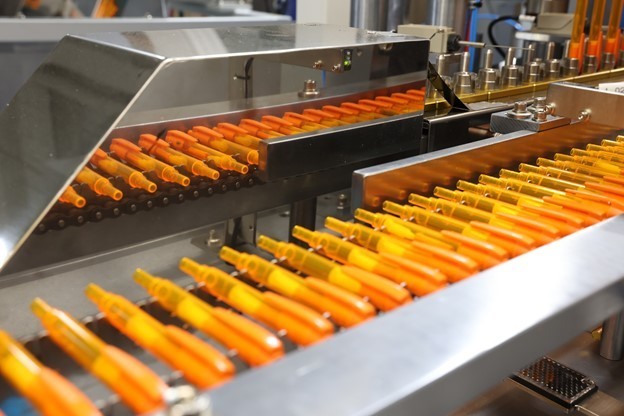
In injection molding applications, the same slip masterbatch chemistry functions as a mold release agent. The migrating amide layer reduces adhesion between the polymer and mold surface, enabling cleaner ejection at higher production speeds with less mechanical ejection force and reduced mold wear.
Formulation Fundamentals: Concentration, Carrier, and Let-Down Ratio
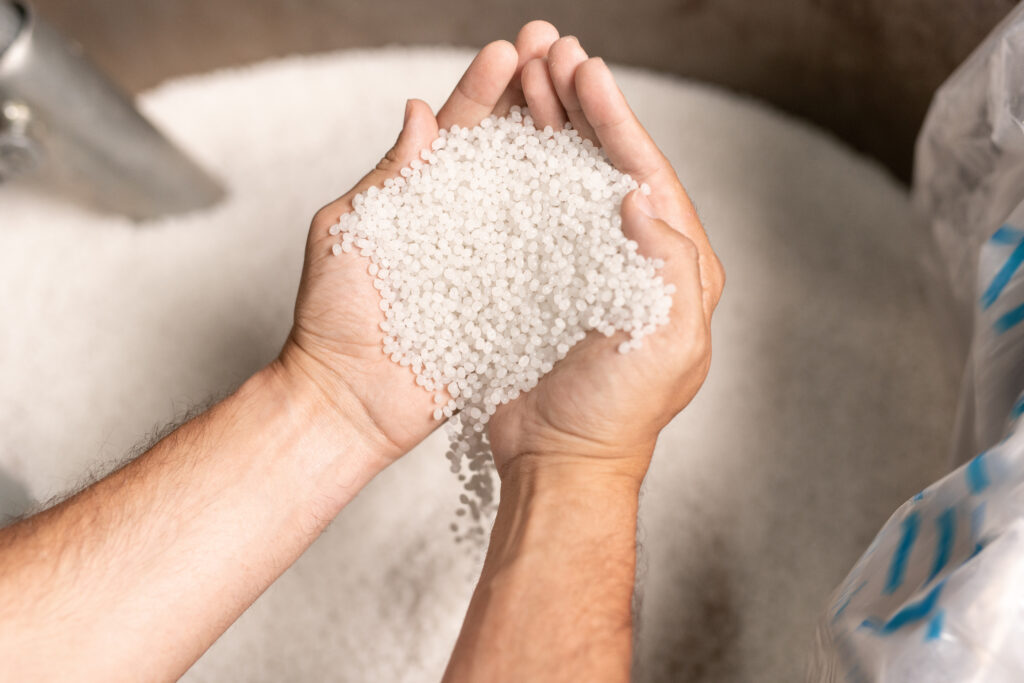
Standard slip masterbatch formulations contain approximately 5% active fatty acid amide in an LDPE or LLDPE carrier resin, a concentration that balances active ingredient loading with the carrier compatibility needed for uniform dispersion into the base film resin during processing. Let-down ratios determine the final active amide concentration in the finished film, with practical ranges running from 1% to 5% masterbatch addition depending on the slip level required.
For low slip applications where some surface friction is desirable for handling or printing reasons, 1% to 2% let-down delivers the COF reduction needed without over-lubricating the surface. Medium slip formulations at 2% to 3% cover the majority of general packaging film applications. High slip requirements, automated packaging lines with demanding COF specifications, high-speed bag-making, or applications where film-to-film friction must be minimized, typically require 4% to 5% masterbatch addition.
For formulators adding the active oleochemical amide directly without masterbatch format, typical addition rates fall between 0.05% and 0.3% for thermoplastic polymer systems, a concentration range that requires accurate dosing equipment to maintain the consistency that target COF performance depends on.
Source the Active Ingredient from a Manufacturer Who Understands the System
The performance of a slip masterbatch traces back to the quality and consistency of the fatty acid amide raw material inside it. Batch-to-batch variation in active content, migration rate, or amide purity creates COF variability in the finished film that neither process adjustment nor masterbatch reformulation can reliably correct without identifying and addressing the root cause at the raw material level.
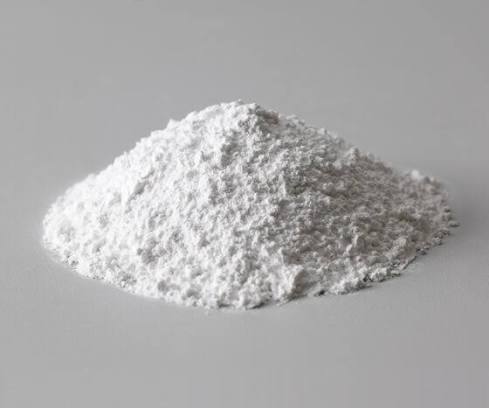
Topwellgoal manufactures and supplies high-purity amide-based additives including erucamide, oleamide, stearamide, and EBS to slip masterbatch producers, film manufacturers, and oleochemical distributors worldwide, with active content exceeding 99.5% and full COA documentation covering all performance-critical parameters.
Contact Topwellgoal today to request product specifications, samples, or technical guidance on selecting the right fatty acid amide grade for your slip masterbatch formulation.