 Chinese
 Italian
 Spain
Spain French
 German
 Arabic
 Portugese

Tailored to Your Production: Amide Additives in Various Forms
Specifying the right amide-based additive for a polymer application is only half the formulation decision. The other half, one that gets less attention than it deserves, is the physical form that additive comes in. Powder, granule, microbead, pastille: the chemistry inside each is identical, but how that chemistry behaves during handling, dosing, and dispersion in the polymer melt varies significantly between formats. For production teams, R&D project formulators, and procurement managers evaluating supply options, understanding those differences prevents sourcing decisions that look correct on paper but create operational problems at the line.
Powder: Maximum Dispersion, Minimum Handling Comfort
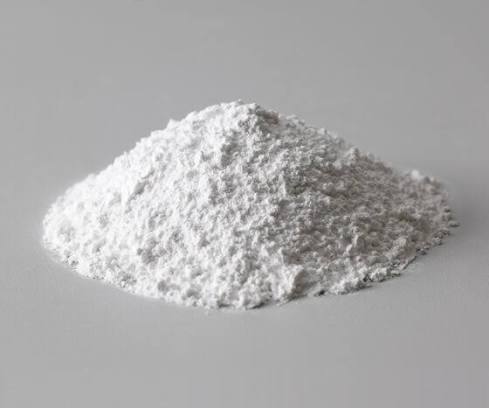
Powder is the most widely available form for fatty acid amide additives, and it has a genuine technical advantage that justifies its continued use in specific contexts: dispersion speed. Fine amide powder presents a high surface area to the polymer melt, allowing it to distribute through the matrix more rapidly than larger particle forms. For R&D project applications where a formulator needs quick blending and immediate evaluation of additive performance, powder minimizes the time between addition and measurable effect, a practical advantage in laboratory and small-scale trial environments.
The limitations become apparent at production scale. Fine amide powder is dusty, adhesive, and difficult to meter accurately at the low addition rates typical of slip and release applications. Feeding 500 grams per hour of powder consistently into a line running at 500 kg per hour requires dosing equipment precision that standard feeders often cannot reliably maintain. The airborne dust generated during handling creates respiratory hazard exposure and workplace contamination concerns, particularly problematic in food-contact film production or any environment with hygiene protocols. For most production environments, powder is the highest-performance dispersion format and the least convenient handling format simultaneously.
Granules and Pastilles: The Production Floor's Preferred Format
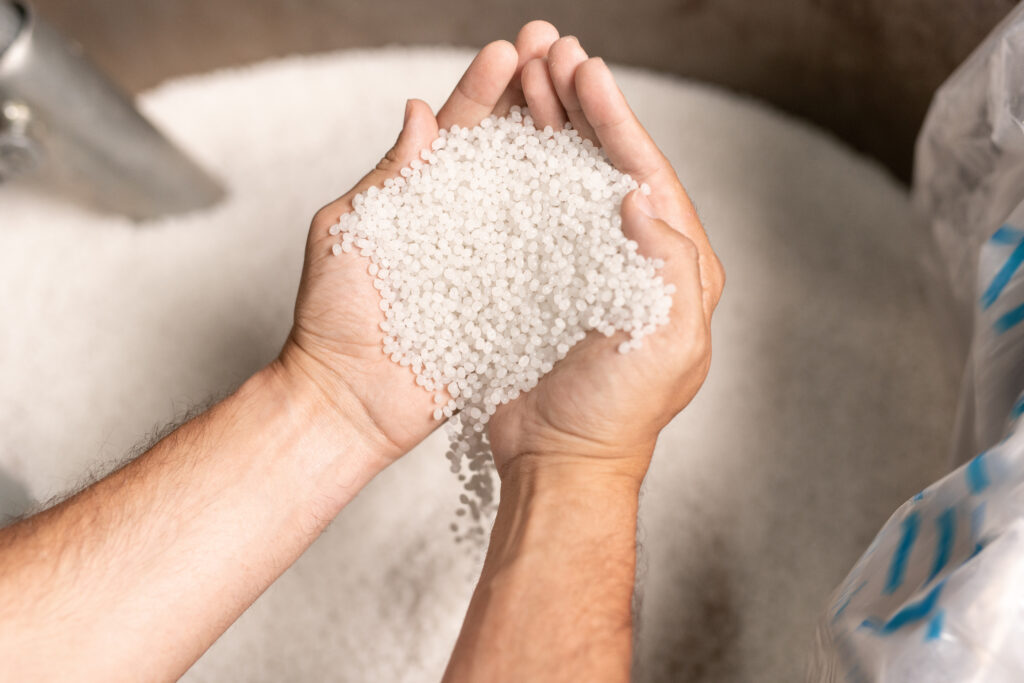
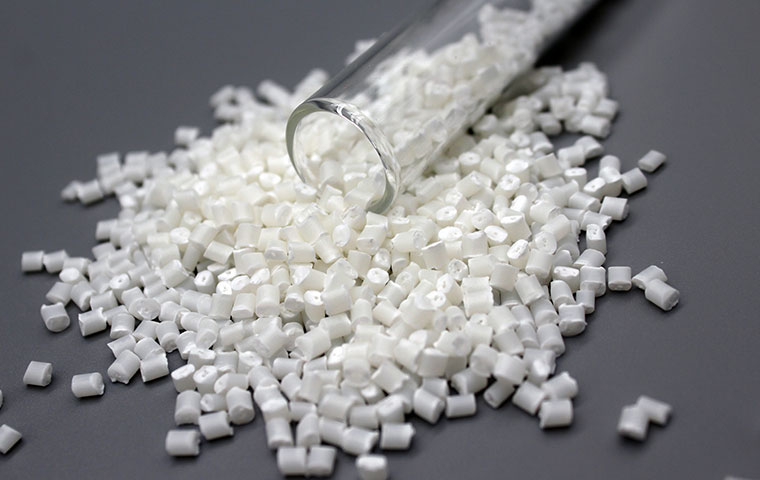
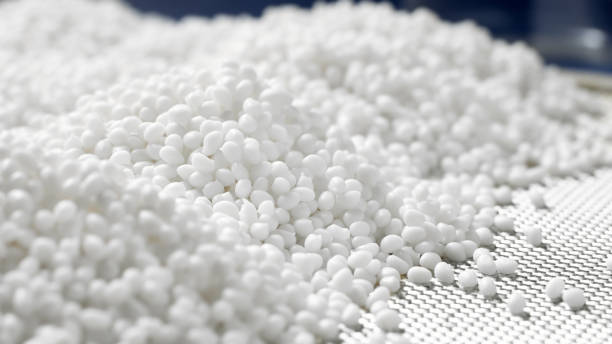
Granular forms, including pastilles, prills, and spherical granules, address the handling limitations of powder while accepting a modest trade-off in initial dispersion speed. The active amide-based additive is formed into solid, free-flowing particles that pour cleanly, feed accurately through standard gravimetric and volumetric dosing systems, and generate no airborne dust during handling or transfer. Floor contamination risk is eliminated, respiratory exposure is removed, and the consistency of additive delivery improves meaningfully relative to powder feeding at equivalent addition rates.
For b2b chemical manufacturer customers running continuous production at scale, these handling advantages compound into real operational value: less downtime from clogged feeders, fewer batch-to-batch inconsistencies from dosing fluctuation, and a cleaner production environment that reduces housekeeping burden and regulatory exposure. The slightly slower initial dispersion rate of granular formats relative to powder is typically compensated by the higher shear and mixing efficiency of production-scale extrusion equipment, at commercial processing conditions, the dispersion outcome is often equivalent.
Topwellgoal's recently commissioned granular erucamide line delivers this format with the same high-purity active content, exceeding 99.5%, that characterizes our full fatty acid amide portfolio. The granules are consistently round, uniformly sized, and produced under tight temperature and cooling controls that ensure the particle characteristics supporting accurate dosing and clean feeding are maintained batch after batch.
Microbeads: Precision Distribution for Demanding Applications
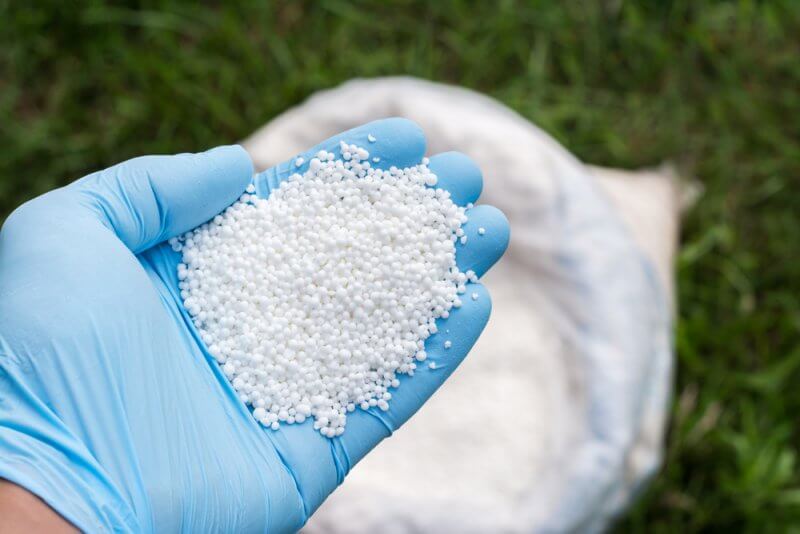
Microbeads represent a refinement of the granular format optimized for applications where particle size uniformity directly affects performance outcomes. In thin film applications, masterbatch production, or specialty compounds where additive distribution at the microscopic level determines surface property consistency, the tighter particle size distribution of microbead formats provides more predictable dispersion behavior than standard granules or powder. The handling advantages of the granular category, dust-free, free-flowing, accurately dosable, are retained, with the addition of more controlled particle geometry.
For R&D project work targeting precise COF targets, optical clarity specifications, or surface energy outcomes that depend on uniform additive distribution across the film or part cross-section, microbead format gives formulators a more consistent starting point than powder or standard granule. The format is also well-suited to masterbatch compounding where the fatty acid amide must disperse uniformly into the carrier resin before the masterbatch itself is produced.
Matching Format to ApplicationThe Decision Framework
The selection logic between formats is a trade-off between two variables: dispersion speed and handling manageability. Powder maximizes the first at the cost of the second. Granules and pastilles optimize the second while delivering adequate dispersion in most production environments. Microbeads target specific applications where particle size uniformity is itself a performance variable.
For laboratory and R&D project environments where flexibility and rapid evaluation matter most, powder remains appropriate. For continuous production environments where dosing consistency, operator safety, and process cleanliness are operational priorities, granular or pastille format is the better fit. For masterbatch production and precision thin-film applications, microbeads offer the tightest control over dispersion uniformity.
As a vertically integrated oleochemical factory and technically engaged chemical factory, Topwellgoal supplies amide-based additives across formats, including powder and granular erucamide, oleamide, stearamide, EBS, and the full fatty acid amide range, to manufacturers and distributors worldwide. Our technical team supports customers in matching the right format to the right application, not just the right chemistry.
Contact Topwellgoal today to request format-specific product specifications, samples, or guidance on selecting the optimal physical form for your amide additive application.